San Antonio - Peru
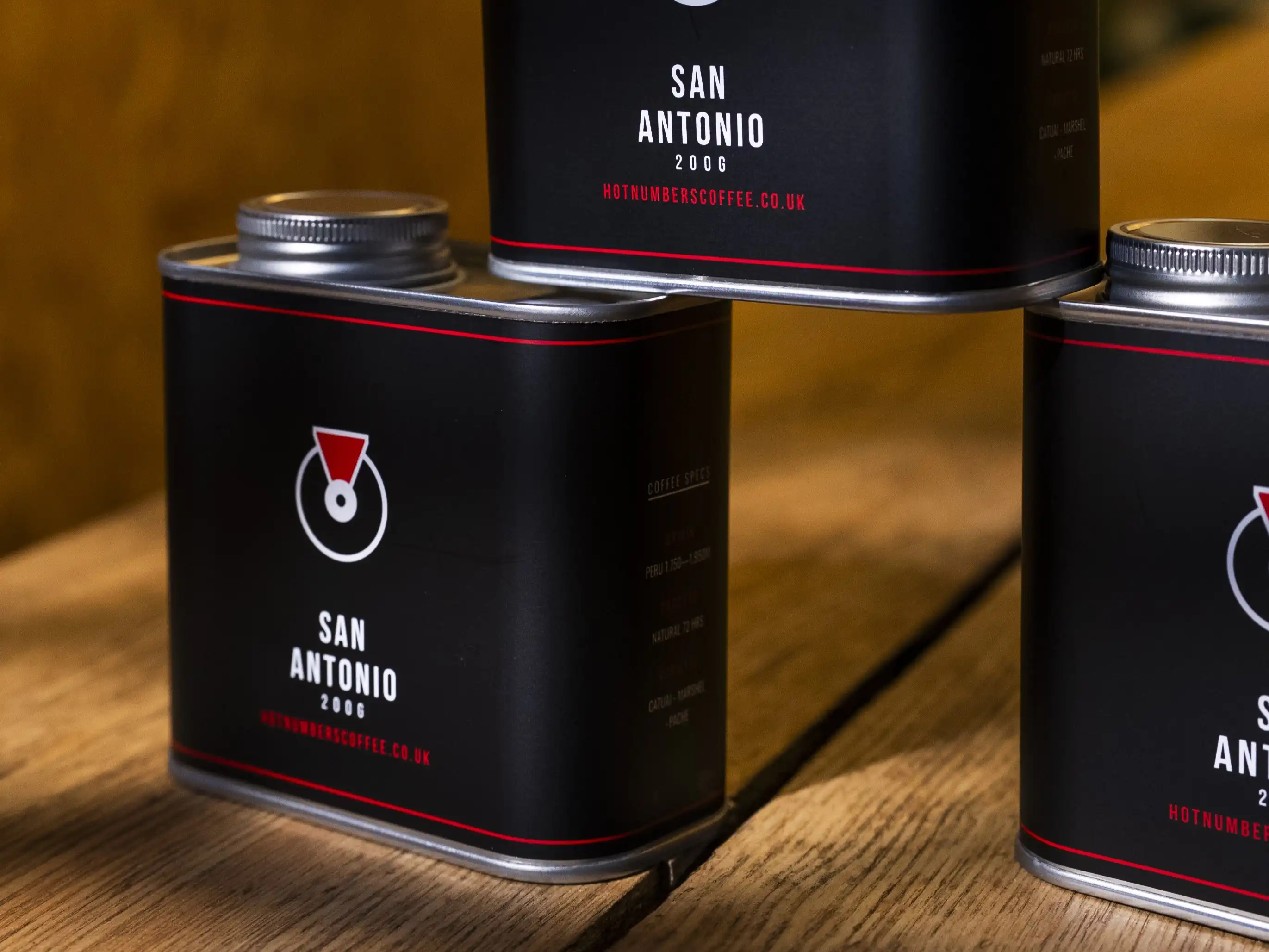
| Tasting Notes | Cherry, Dark Chocolate, Liquorice and Tropical Fruit |
|---|---|
| Region | San Antonio, Huabal, Cajamarca |
| Elevation | 1750 - 1950 masl |
| Process | 72 Hour Natural |
| Variety | Catuai, Marshel, Pache |
| Importer | Falcon |


| Tasting Notes | Cherry, Dark Chocolate, Liquorice and Tropical Fruit |
|---|---|
| Region | San Antonio, Huabal, Cajamarca |
| Elevation | 1750 - 1950 masl |
| Process | 72 Hour Natural |
| Variety | Catuai, Marshel, Pache |
| Importer | Falcon |
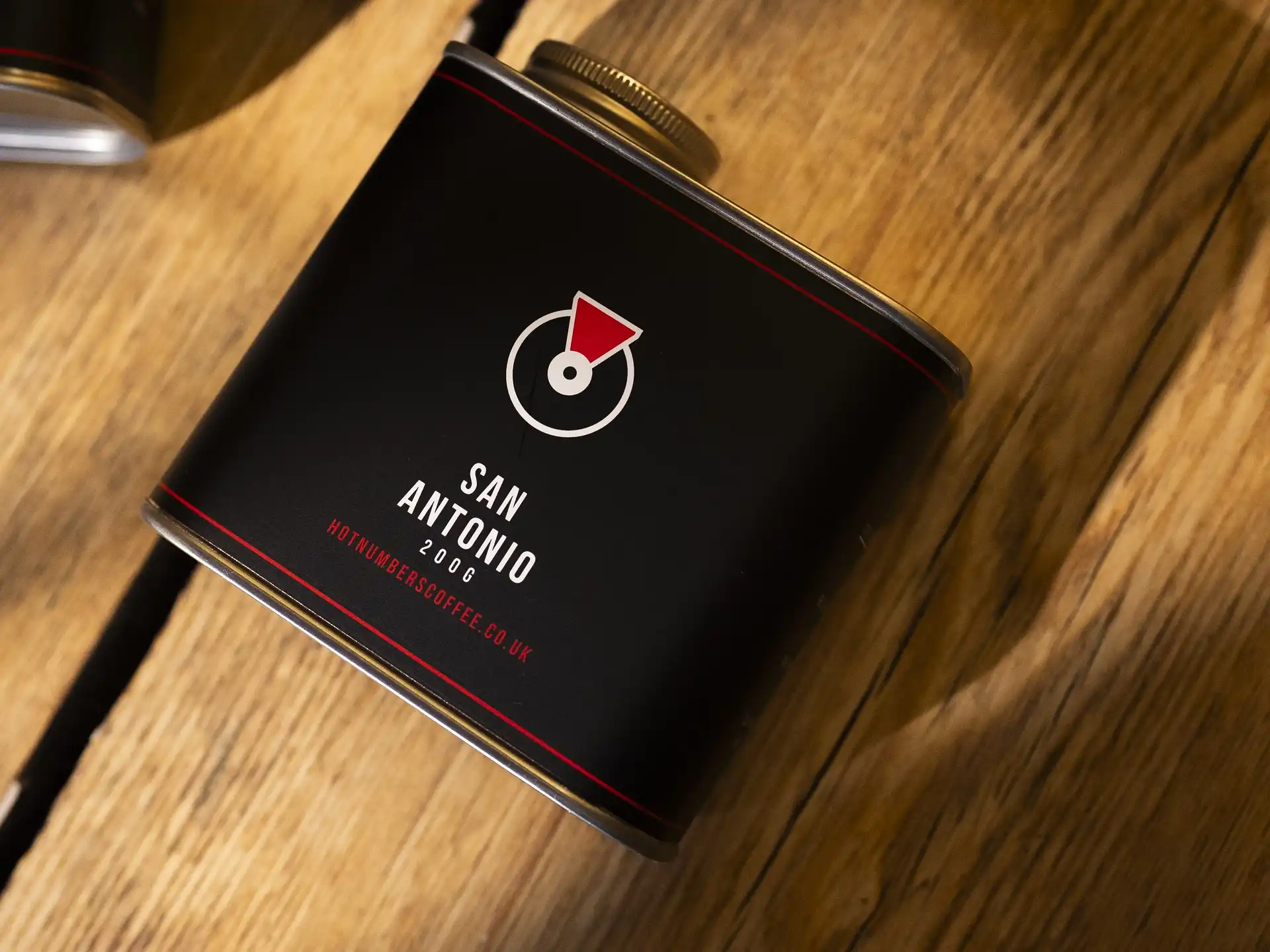
San Antonio is a Peruvian single-origin coffee from the village of San Antonio in Huabal, Cajamarca, grown between 1,750 and 1,950 masl and roasted in Cambridgeshire by Hot Numbers Coffee. It tastes of cherry, dark chocolate, liquorice and tropical fruit, with the soft sweetness of a carefully worked natural.
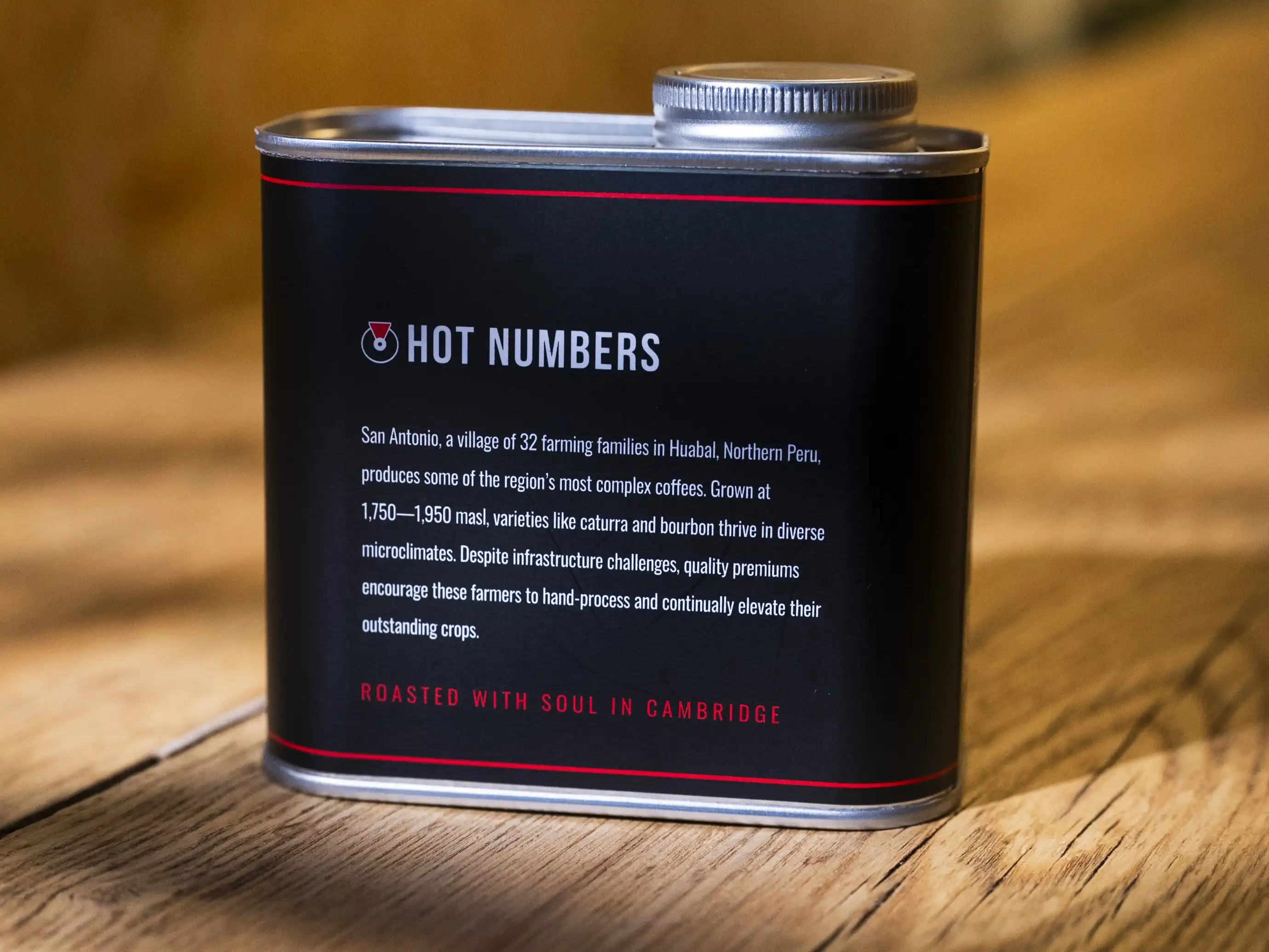
San Antonio is a village in the district of Huabal, home to over 32 farming families. It is one of the areas that produces some of the best coffees in all of Northern Peru, and this lot shows why.
This lot is a 72 hour natural, dried in the whole cherry, with varieties Catuai, Marshellesa and Pache. Buy it from £15.00, roasted in small batches at our Shepreth Roastery.
Available from £15.00. Choose your weight and grind — Whole Bean as standard, with ground options at checkout — before adding to your basket.
The land runs from 1,750 up to around 1,950 masl, and San Antonio is one of the areas producing some of the best coffees in all of Northern Peru. Drying beds and tents are still not very common here, so most producers dry their coffee on tarpaulin mats on the ground. Most pick their cherries themselves, with the help of family and neighbours, before processing and drying at home.
Huabal is a district within the Jaén province of Cajamarca and one of our strongest areas for members and quality. It has great potential for quality coffee, but due to very poor infrastructure many producers lack the resources and knowledge to unlock it. Most of the producers we work with sit above 1800masl.
Many producers in Huabal had been regenerating their farms with catimores, promoted by the government, which rarely produce much at the higher altitudes and give poor quality in the cup. With the premiums they now earn for quality, more are re-planting caturra, bourbon and catuai — varieties that, with good management and fertilisation, yield more and better coffee.
Huabal is made up of various villages, each a centre of coffee production, and every producer belongs to one. Since Huabal spans a couple of mountains, climate and soils vary a lot: some areas are wet and humid with red, African-like soils, others dry and hot. That range is what creates such diverse and delicious cup profiles — and coffees as complex as this one.
This coffee is a 72 hour natural. Ripe cherries are picked by the producer and their family, then dried whole in the fruit across 72 hours before finishing and resting — the slow, fruit-forward process behind its sweetness, body and complexity.
Because most producers in the region dry on tarpaulin mats rather than raised beds, careful turning and protection from rain and overnight moisture are what keep the cup clean and consistent.
A: San Antonio is a Peruvian single-origin coffee from the village of San Antonio in the Huabal district of Cajamarca, grown between 1,750 and 1,950 masl on smallholder farms and roasted in Cambridgeshire by Hot Numbers Coffee. It tastes of cherry, dark chocolate, liquorice and tropical fruit, and is imported through Falcon.
A: Cherry, dark chocolate, liquorice and tropical fruit. San Antonio is one of the areas producing some of the best coffees in Northern Peru, and this sweet, layered natural is a good example of why.
A: It is a 72 hour natural. Ripe cherries are dried whole in the fruit across 72 hours, then finished and rested, which builds the sweetness and body in the cup.
A: In the village of San Antonio, district of Huabal, Jaen province, Cajamarca, Northern Peru, at 1,750 to 1,950 masl. San Antonio is home to over 32 farming families.
A: Catuai, Marshel and Pache, imported through Falcon. Across Huabal many producers are now replanting caturra, bourbon and catuai in place of the catimor promoted in the past, which yields more and better coffee at these altitudes.
A: Over 32 farming families in the village of San Antonio, in the Huabal district of Jaen province, Cajamarca. Most pick their cherries themselves with the help of family and neighbours, then process and dry the coffee at home.
A: Huabal is a district within the Jaén province of Cajamarca, Northern Peru, and one of our strongest areas for members and quality. Most of the producers we work with farm above 1,800 masl.
A: Yes. San Antonio comes from one village in Huabal, Cajamarca, with no blending.
A: Both work well. As filter — V60, Chemex or Aeropress — brew at 1:16 with water around 90–94°C to keep the delicacy and complexity. As espresso, the natural sweetness and body come forward.
A: Whole Bean stays freshest for longest. If you would rather we grind it, choose a grind at checkout and we will grind it to order just before it ships.
A: Every bag is roasted to order in fresh weekly batches at our Shepreth roastery and sealed with a one-way valve. Rest filter coffee 5–7 days after the roast date and espresso 7–12 days for a sweeter, better-balanced cup.

Choose a grind size to suit your brew method:


|
Whole Bean |

|
French Press |

|
Filter |

|
Moka Pot |

|
Espresso |

|
AEROPRESS |

|
Turkish Press |

|
250gApproximately 15 cups |
|
500gApproximately 30 cups |
|
|
1 KGApproximately 60 cups |
|
3 KGApproximately 180 cups |