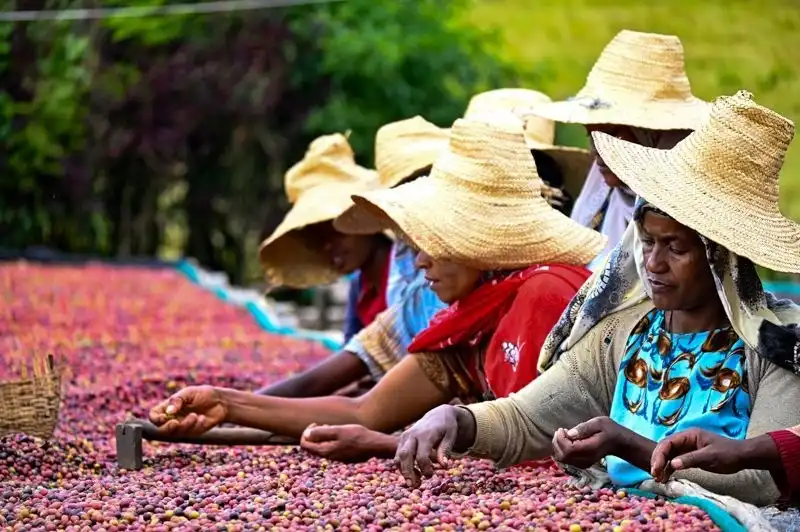
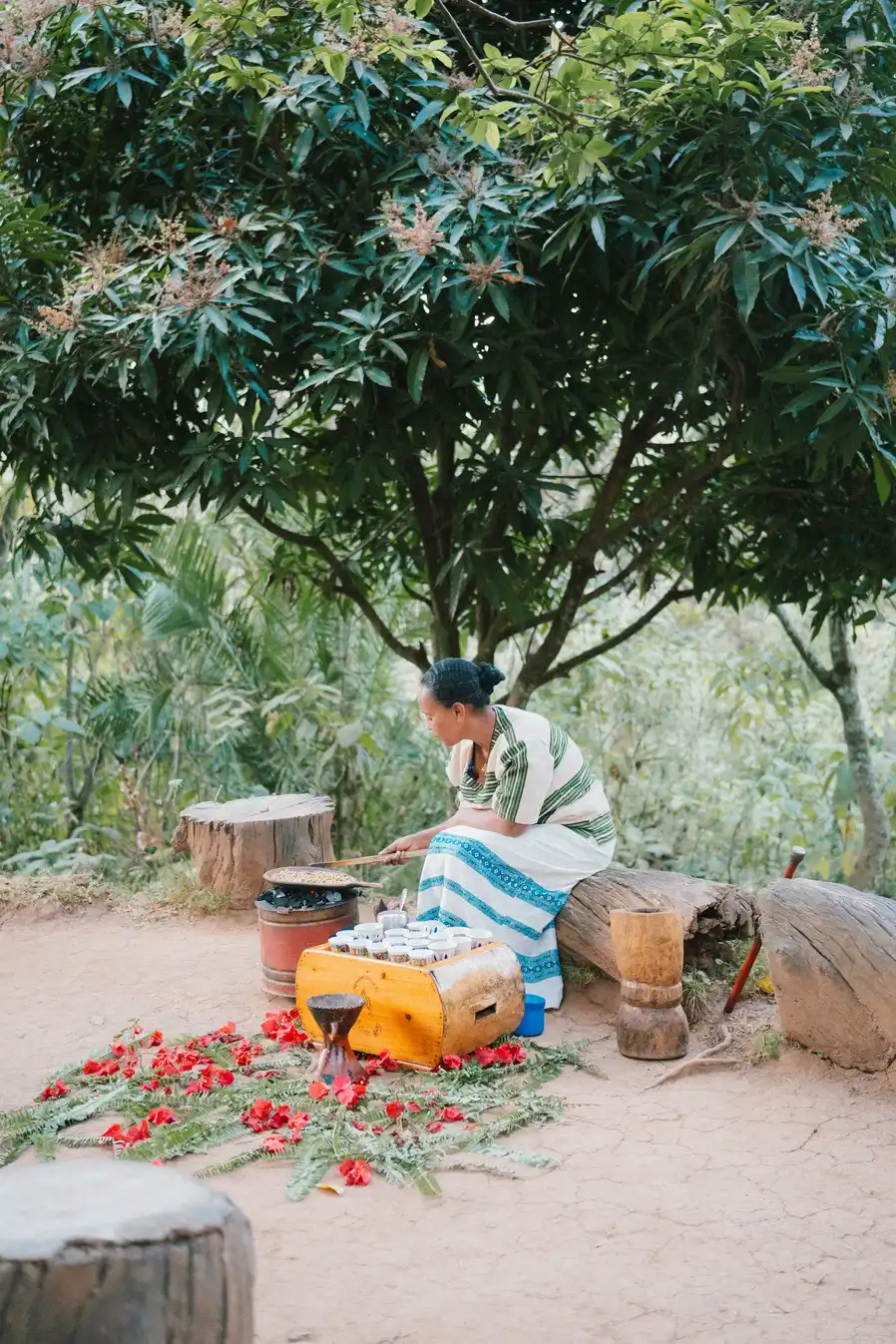
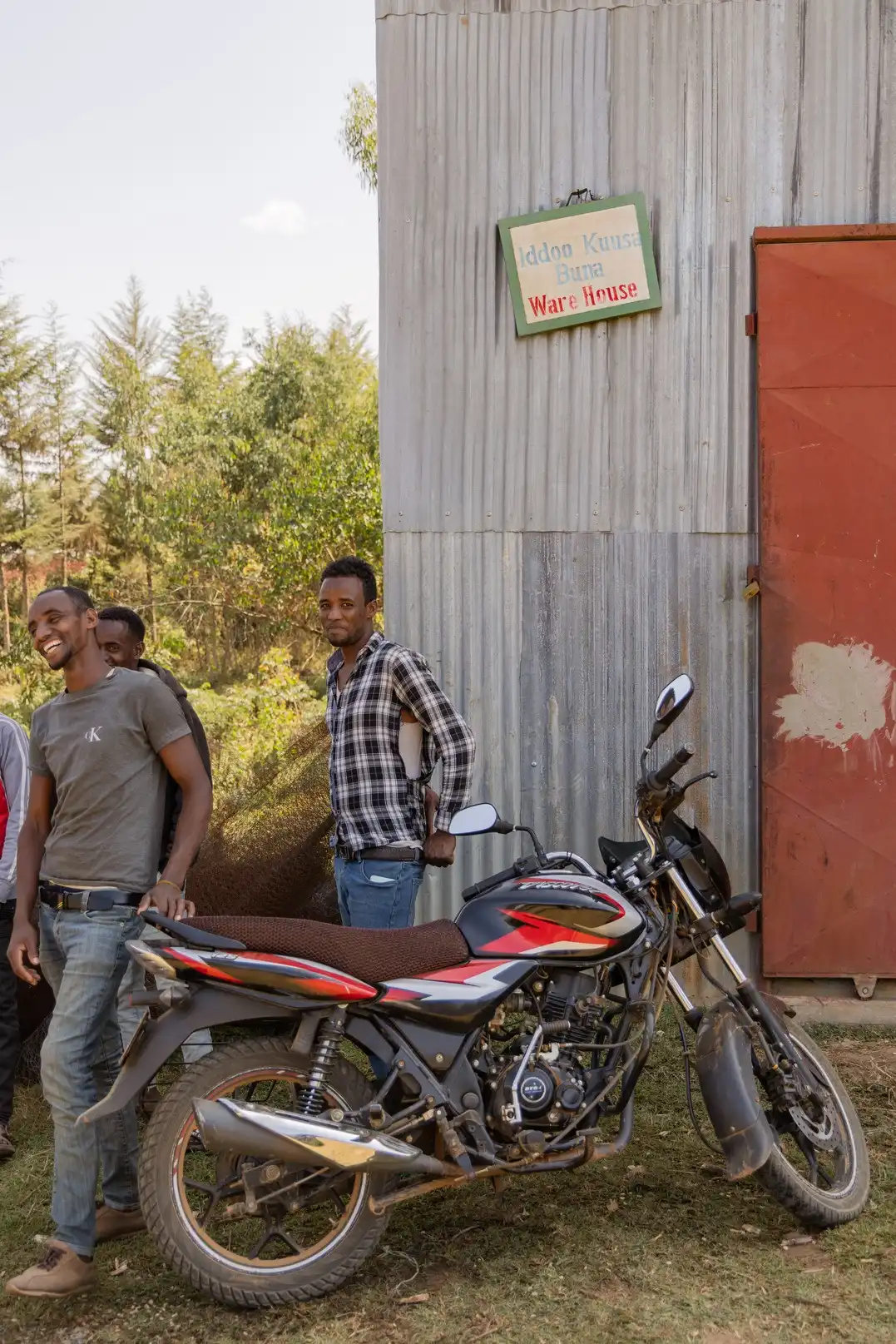
This exclusive single-origin lot marks an extraordinary milestone: the very first all-female-produced release from the renowned Telila Coffee Washing Station in Gera, western Ethiopia. Bringing together the meticulous harvests of eight visionary women smallholders—Bashasha Aba Sura, Faxe Tofik, Saida Nasradin, Imamu Siraj, Sayida Mizbaw, Salia Nasrudin, Roman Mujai, and Sufi Aba Garo—this coffee celebrates regional craftsmanship, sustainability, and female leadership in specialty coffee.
To directly support their craft and foster long-term independence, a dedicated quality premium was paid straight to these eight producers to invest back into their farms and communities.
Grown in the high-altitude Kecho Anderacha Kebele of Ethiopia’s historic Jimma Zone, this micro-lot features traditional Gibirinna 74110 and Serto 74112 cultivars. Processed using a refined clean Ethiopian honey method, the cherries are depulped with a delicate layer of fruit mucilage intact and dried naturally across raised beds for 48 to 72 hours. The result is a brilliantly clean, complex cup boasting crisp floral aromatics, bright stone fruit acidity, and a smooth, natural honey sweetness.
We are delighted to partner with Cambridge Edition to share this landmark release with you—a true celebration of shared history, community, and world-class Ethiopian coffee.
FAQ's
Q: What is the Hot Numbers x Cambridge Edition 2026 Joint Anniversary Coffee?
A: It is a special limited-edition single-origin Ethiopian coffee released in 2026 to celebrate the joint anniversary of Hot Numbers Coffee and Cambridge Edition. It represents the first female-produced lot from the Telila Washing Station in Gera, Jimma Zone.
Q: How was this Ethiopian coffee processed?
A: This lot is honey-processed. A light layer of fruit mucilage is left on the coffee beans after depulping before they are dried on raised beds for 48–72 hours, creating a clean, crisp Ethiopian flavor profile distinct from Central American honey methods.
Q: Who produced this coffee lot?
A: This coffee was grown by eight female smallholder producers in Gera, Ethiopia: Bashasha Aba Sura, Faxe Tofik, Saida Nasradin, Imamu Siraj, Sayida Mizbaw, Salia Nasrudin, Roman Mujai, and Sufi Aba Garo. A quality premium was paid directly to support their farms.
Origin & Producer Intent
Q: What is the story behind the Hot Numbers and Cambridge Edition collaboration?
A: This special coffee was launched in 2026 to celebrate the joint anniversary of Hot Numbers Coffee and Cambridge Edition. To mark this milestone, both brands partnered to source a flagship release: the first-ever all-female-produced lot from Telila Coffee Washing Station in Ethiopia.
Q: Why is female-produced coffee significant in Ethiopia?
A: In many Ethiopian coffee-growing regions, women contribute significantly to harvesting and processing but are rarely compensated as independent producers. For this lot, a targeted price premium was paid directly to the eight female smallholders (Bashasha Aba Sura, Faxe Tofik, Saida Nasradin, Imamu Siraj, Sayida Mizbaw, Salia Nasrudin, Roman Mujai, and Sufi Aba Garo). This extra income supports farm improvements, family livelihoods, and female economic autonomy in the Gera district.
Q: Where is the Telila Coffee Washing Station located?
A: Telila Coffee Washing Station is located in Kecho Anderacha Kebele, within the Gera district of the Jimma Zone in western Ethiopia. The station has been operational since the 2019/2020 harvest season and is owned by Mike Mamo (partner in Osito Coffee since 2020).
Coffee Variety & Processing Intent
Q: What are Gibirinna 74110 and Serto 74112 coffee varieties?
A: Gibirinna 74110 and Serto 74112 are famous Ethiopian landrace selections developed by the Jimma Agricultural Research Center (JARC) in 1974. Selected from wild coffee trees in the Metu Bishari forest of the Illubabor Zone, these cultivars are known for their natural resistance to Coffee Berry Disease, compact tree structure, and vibrant floral and citrus cup profiles.
Q: How does Ethiopian honey processing differ from Central American honey processing?
A: Central American honey processing (such as yellow, red, or black honey) often leaves high amounts of fruit mucilage on the bean, resulting in deep, sugary, or heavy wine-like flavors. At Telila, the coffee undergoes a light, clean honey process: after depulping, cherries are spread across raised beds for 48–72 hours. As they dry, much of the mucilage naturally falls away, delivering a clean, bright cup that preserves the delicate florals and terroir of Ethiopian coffee.
Q: Is this Ethiopian coffee organic certified?
A: While the eight contributing farms utilize passive organic farming practices—relying on traditional, chemical-free cultivation—the lot is non-certified organic due to the high administrative costs of formal certification for local smallholders.
Brewing & Tasting Intent
Q: What does Ethiopian honey-processed coffee taste like?
A: Ethiopian honey-processed lots typically combine the crisp floral aromatics (jasmine, citrus blossom) and high-toned fruit acidity of traditional washed coffees with the smooth, honey-like sweetness and creamy body of a natural process.
Q: How should I brew the Telila Ethiopian Single Origin coffee?
A: Because of its clean honey processing and vibrant regional profile, this coffee shines best in filter and pour-over methods (V60, Chemex, Aeropress). Use a brewing ratio of 1:16 (coffee to water) with filtered water at ~92°C to 94°C to extract its floral aromas, soft stone fruit notes, and subtle honey sweetness.
Hot Numbers Coffee FAQ's
Q: Where is Hot Numbers coffee roasted?
A: All of our coffee is small-batch roasted right here in Cambridgeshire at our HQ Roastery in Shepreth. We roast every batch with care to bring out the natural sweetness and distinct character of every single origin bean.
Q: What is the roasting style of Hot Numbers Coffee?
A: We roast light-to-medium to celebrate the natural flavor and origin of each coffee. For this Ethiopian single origin, our light roast preserves its delicate floral aromas, bright fruity notes, and clean, natural sweetness without any dark or smoky bitterness.
Q: How fresh is the coffee when it arrives?
A: We roast in fresh weekly micro-batches so your coffee is always roasted to order. Every bag is sealed with a one-way degassing valve right after roasting to lock in freshness and rich flavor until it reaches your door.
Q: How long should I let my coffee rest before brewing?
A: For filter coffees like pour-over or Aeropress, we suggest resting your beans for 5 to 7 days after the roast date printed on your bag. If you are brewing espresso, resting for 7 to 12 days gives the beans time to settle, resulting in a smoother, better-balanced shot.
Q: How should I store my Hot Numbers coffee beans?
A: Keep your beans in their original resealable valve bag or place them in an airtight container in a cool, dark place like a pantry or cupboard. Avoid keeping coffee in the fridge, as moisture and food odors can affect its fresh taste.